



Watch our how-to video
How to fill a gap between skirting and wall

Cracks between skirting boards and walls are a common decorating frustration. You fill them, paint over them… and a few months later, they're back.
If you're searching for the best way to apply filler between skirting and wall, or wondering why cracks keep reappearing, the answer usually comes down to movement. Traditional fillers dry hard, and when the wall or wood shifts slightly, they crack.
That's where Fill-Flex comes in.

Why Do Cracks Appear Between Skirting and Walls?
Before we get into the how-to, it helps to understand the problem.
Gaps and cracks reappear because:
- Timber skirting boards expand and contract with temperature changes
- Walls and ceilings naturally shift slightly over time
- New builds settle
When movement occurs, rigid fillers fail, resulting in visible cracks along the skirting line.
Viewing this video may result in the use of cookies by the video platform partner. Given your refusal to accept cookies, and out of respect for your choice, we have blocked the playback of this video. If you wish to continue viewing, please give us your consent by clicking on the button below.
What Is Fill-Flex?
Fill-Flex is a flexible, ready-to-use filler specifically designed for areas where movement occurs, such as:
- Skirting boards
- Door frames
- Architraves
- Walls and Ceilings
- Trim and mouldings
Unlike other fillers, Fill-Flex is reinforced with fibers that allow the product to move with both interior and exterior substrates. This flexibility helps prevent cracking and creates a longer-lasting, professional finish.
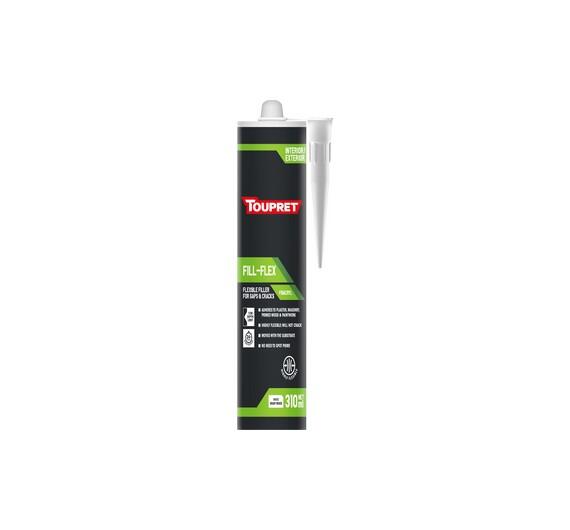
Step-by-Step Guide: How to Apply Filler Between Skirting and Wall
Follow these simple steps for a smooth, crack-resistant result.
Step 1: Prepare the Applicator
Open the Fill-Flex tube.
Insert it securely into a standard applicator (caulking gun).
Cut the nozzle to the desired bead size, slightly smaller than the gap is usually best for control. Cutting the nozzle at a 45-degree angle will improve application.
Ensure the area between the skirting and wall is clean and free of dust and loose debris before applying.
Step 2: Apply Fill-Flex Evenly
Hold the applicator at a consistent angle and apply steady, even pressure.
Run a smooth bead of Fill-Flex along the gap between the skirting and wall.
Top tips for a clean finish:
1. Move at a consistent speed
2. Avoid stopping and starting mid-line
3. Apply slightly more than needed - you'll smooth it back in the next step
The reinforcing fibers in Fill-Flex allow the filler to flex with natural movement, helping prevent future cracking.
Step 3: Smooth and Remove Excess
This step is crucial.
Immediately after application:
Smooth the bead using your finger or use a slightly damp sponge for a clean edge.
Top Tip: Once set, Fill-Flex is resistant to sanding due to its flexibility. Take time to smooth and remove the excess while the product is still workable.
Why Flexible Filler Is Better Than Standard Caulk
If you've been repeatedly repairing cracks between skirting boards and walls, switching to a flexible fiber reinforced filler makes a big difference.
Traditional Caulk
- Can only be used indoors
- Won't offer long term flexibility
- Requires repeat repairs
Fill Flex: Reinforced with fibers
- Moves with the substrate
- Stops cracks reappearing
- Provides a long-lasting finish
If you're tired of reappearing cracks between skirting and walls, the key isn't just how you apply filler; it's choosing a product designed to handle movement.
Fill-Flex makes it easy to achieve a smooth, professional finish that lasts. Apply evenly. Smooth immediately. Let it flex.
Explore more products in our problem surfaces range